


Have you ever wondered what makes real estate such a magnet for investors and entrepreneurs? The residential market in India is booming, with luxury housing setting new standards and Tier 2 and Tier 3 cities emerging as powerful growth engines. Cities like Gurgaon, with its high-rise developments, and Bengaluru, with its thriving IT hubs, show that demand for housing and office spaces is practically endless.
Starting a real estate business isn’t just about buying and selling property—it’s part of a cycle of wealth that has created more millionaires than almost any other sector. With careful planning, even a small venture can grow into a steady income-generating machine.
As of 2025, the Indian real estate sector reached an estimated ₹6 lakh crore in total sales value, with both the affordable and luxury segments contributing to growth. Looking ahead to 2026, around 68% of developers expect housing prices to rise by more than 5%, with many anticipating 5–10% or higher increases, making it an opportune time to enter the market.
In this article, we’ll guide you step by step on how to start a real estate business in India from scratch.
What Is a Real Estate Business?

A real estate business focuses on selling, renting, or managing land and the structures surrounding it. It’s a vast ecosystem that supports everything from where we sleep to where we work and shop.
To make you grasp the various aspects of this industry, these are the main categories:
- Residential Sector: This sector covers residential housing, including apartments, villas, and independent houses.
- Commercial Space: This is office buildings, retail shops, and malls where business is conducted.
- Industrial Real Estate: This involves warehouses, manufacturing, and logistics centers.
- Land Development: This involves acquiring raw land and transforming it into viable plots or projects.
- Property Management: This service-oriented model handles the day-to-day operations and maintenance for property owners.
How People Actually Make Money
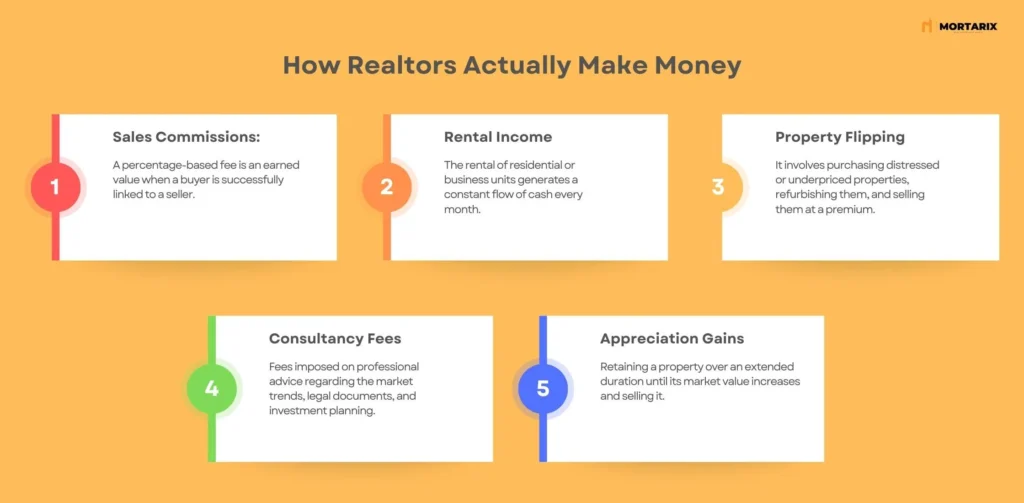
Profitability in this area does not consist only of a single way but consists of several different income streams, as shown below:
- Sales Commissions: A percentage-based fee is an earned value when a buyer is successfully linked to a seller.
- Rental Income: The rental of residential or business units generates a constant flow of cash every month.
- Property Flipping: It involves purchasing distressed or underpriced properties, refurbishing them, and selling them at a premium.
- Consultancy Fees: Fees imposed on professional advice regarding the market trends, legal documents, and investment planning.
- Appreciation Gains: Retaining a property over an extended duration until its market value increases and selling it.
Can You Start a Real Estate Business Without Money? (Reality Check)
Yes, but you must be realistic about your role. It takes money to be a developer, but there is no doubt that you can begin as a service provider or intermediary.
What Is Possible
In case you have zero or very low capital and a starting point, the following are the entry points on how to start a real estate business:
- Real Estate Agency: You can be an intermediary between the buyer and the seller, and you do not have to possess a property yourself.
- Property Scouting: Locating good deals on behalf of large investors and taking a finder’s fee on your legwork.
- Digital Marketing: Social media management and lead generation of the builders who do not have an online presence, but the inventory is there.
- Freelance Staging: Assistance to sellers to make their houses look better in front of buyers with the help of the existing furniture.
- Virtual Assistant: This is a kind of administrative assistance to the busy brokers, so that you can learn the ropes at no cost.
What Is NOT Possible
However, there are other facets in which money cannot be compromised, and the areas include:
- Purchasing Land: The process of buying physical objects or plots will not be made without a substantial amount of initial capital or financing.
- New Construction: Construction of houses or commercial complexes is done using massive amounts of money on materials, labor, and permits.
- Huge Advertising: It is impossible to run nationwide campaigns on billboards or television without a dedicated marketing budget.
- Holding Inventory: You can not buy and hold properties in anticipation of price increases without cash to purchase them.
- Legal Expenses: Paying registration fees, stamp duty, and expensive lawyer consultations requires liquid cash.
How to Start a Real Estate Business in India (Step-by-Step)
Setting up a real estate business in India is not merely about buying and selling real estate; it is about understanding markets, laws, and relationships. With the right step-by-step approach, even first-time entrepreneurs can build a profitable and sustainable presence in this high-growth industry.
Step 1: Choose Your Real Estate Business Model
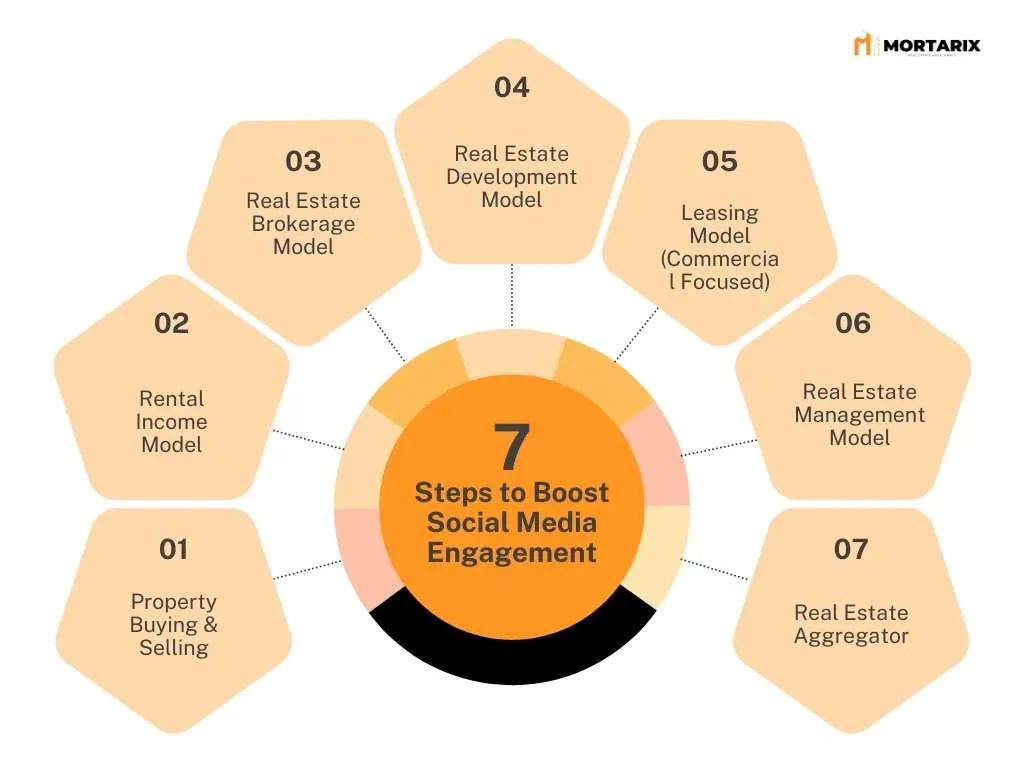
All real estate ventures begin with a clear understanding of how the business will run. The property business in India has various opportunities, and the business model adopted dictates the income base, day-to-day functionality, and scalability. In the absence of this, even strong market demand will not translate into steady income.
At this point, one can filter through the business models that are available and prevent the possibility of venturing into them:
- Residential sales and rental brokerage.
- Commercial real estate transactions.
- Real estate management and leasing.
- The channel partner model and the developers.
- Advisory or consulting real estate services.
After selecting a specific model, the business gets a goal and direction. A well-designed brand can expand with a sense of identity due to the ease of strategic alignment, marketing messages, and client engagement.
An established business model provides a number of structural benefits:
- Vivid positioning in a competitive market.
- More alignment of resources and skills.
- Reduced operational inefficiencies.
- Less complicated transition to scaling and expansion.
Step 2: Understand Legal & Regulatory Basics

India has a structured legal framework for the real estate business. Early knowledge of the regulatory requirements removes compliance risks and enhances credibility. Clarity in the law also encourages clients who require transparency in high-value property transactions.
In order to work under the law and profession, some of these regulatory backgrounds have to be settled first:
- Registration by the respective State RERA authority.
- Selection of the proper business structure.
- PAN, GST registration, and opening a bank account.
- Knowledge of stamp duty, registration fees, and GST.
The business will gain the confidence of clients and developers with compliance. Open operations decrease tense situations when transacting and minimize the development and maintenance of professional relations.
A good legal foundation can have a direct bearing on the stability of the business by facilitating:
- Less chance of conflicts and fines.
- It has expedited approvals and documentation.
- Improved market reputation
- Long-term confidence in operations.
Step 3: Learn the Market (Even Without Experience)
Real estate experience is attainable, whereas knowledge of the market has to be ongoing. Knowing the local property ecosystem will enable new entrants to provide informed advice and not generic listings. This knowledge will form the foundation of the strength of the negotiation and the pricing precision.
Market learning starts with close observation of such key local indicators as:
- The trends in property prices in the micro markets.
- Latent demand patterns of buyers and tenants.
- Type of preferred property and budgets.
- Infrastructure and development announcements.
As knowledge gets enhanced, relationships with the clients become consultative. This change goes a long way in improving trust and retention of clients.
Practical understanding of the market will eventually result in quantifiable business outcomes, and they include:
- Better quality client conversations.
- Better deal conversion rates.
- Better negotiation performances.
- More referrals based on credibility.
Step 4: Build Local Network (Most Important Asset)
It is through relationships that real estate is built, even before it is built on properties. A good local network gains access to inventory, proven buyers, and timely market information. This network, over time, is a strong growth engine for people looking for how to start a real estate business.
The establishment of a reliable ecosystem means networking with the essential local stakeholders, which include:
- Real estate developers and builders.
- Channel partners and fellow brokers.
- Legal professionals and documentation professionals.
- Bankers and home loan consultants.
When these relationships become more mature, the deal flow is more organic. The expenses incurred in marketing are minimised, and the level of trust-based transactions is enhanced.
A good network enhances business bases by providing:
- Availability of off-market opportunities.
- Faster deal closures
- Increased bargaining power.
- Long-term referral-based growth.
How to find clients in real estate
| Method | How It Works | Tips for Beginners |
|---|---|---|
| Leverage Your Network | Tell friends, family, and acquaintances about your services | Ask for referrals and stay in touch regularly |
| Attend Local Events | Go to property fairs, community events, and networking meetups | Bring business cards and introduce yourself confidently |
| Social Media | Post listings, tips, and client stories on Facebook, Instagram, LinkedIn | Use high-quality photos and engaging captions |
| Online Property Portals | List properties on platforms like 99acres, MagicBricks, Housing.com | Keep listings detailed and up-to-date |
| Content Marketing | Share blogs, videos, or newsletters to educate buyers and sellers | Focus on helpful advice, market trends, and success stories |
| Cold Calling / Door Knocking | Reach out directly to potential sellers | Be polite, professional, and provide value |
| Referrals | Encourage satisfied clients to refer friends and family | Offer incentives or thank-you gestures for successful referrals |
Step 5: Start With Zero or Low Investment Methods
Real estate is not necessarily something that demands a lot of money. Several prosperous professionals have very little capital to begin with, but use their energy in performing and building relationships instead of infrastructure. Models that demand low investment make it possible to learn as one earns.
Part of the practical entry-level methods include:
- Working as an independent real estate agent.
- Being a channel partner to developers.
- Ensuring rentals and resales.
- Some types of property advisory or consulting services may include:
Lean start-up gives flexibility and financial ease. The business has the benefit of investing in branding, systems, and expansion over time as experience and revenue grow.
Low-investment entry mode has the strategic advantages of:
- Reduced financial risk
- Faster market exposure
- Practical learning experience.
- Easy passage into a full-scale operation.
Step 6: Market your real estate business.
Marketing your real estate business is all about getting noticed and building trust with potential buyers. Even as a beginner, you can start with simple strategies:
- Build an Online Presence: Create a professional website and social media pages to showcase your listings. Post high-quality photos, videos, and client stories.
- Local Marketing: Use signboards, flyers, and attend local property events to reach buyers in your area.
- List on Property Portals: Share your properties on platforms like 99acres, MagicBricks, and Housing.com.
- Referrals: Encourage satisfied clients to recommend you to friends and family.
- Content & Emails: Share blogs, tips, and newsletters to educate buyers and stay in touch.
- Optional Paid Ads: Use Facebook, Instagram, or Google ads to target local buyers.
Tip: Be consistent. Regular posts, follow-ups, and updates help build credibility and bring steady leads over time.
Real Estate Business Start-Up Costs in India
| Expense Category | Estimated Cost (INR) | Frequency |
| RERA Agent Registration | ₹5,000 – ₹25,000 | One-time/Renewal |
| Office Rent (Small/Co-working) | ₹10,000 – ₹30,000 | Monthly |
| Website & Branding | ₹15,000 – ₹50,000 | One-time |
| Marketing & Lead Gen | ₹5,000 – ₹20,000 | Monthly |
| Basic Equipment (Laptop/Phone) | ₹40,000 – ₹80,000 | One-time |
What are the benefits of being a real estate agent?
Being a real estate agent can be a rewarding career for many reasons. Here are the main benefits:
- Unlimited Earning Potential: Your income depends on your effort and sales — the more properties you sell, the more you earn.
- Flexible Schedule: You can often choose your working hours and plan your day around client meetings and property visits.
- Helping People: You guide clients to find their dream home or sell their property, making a real difference in their lives.
- Career Growth: Successful agents can grow their business, manage a team, or even start their own real estate agency.
- Networking Opportunities: You meet clients, developers, investors, and other professionals, which can open doors to new opportunities.
- Variety: No two days are the same — from property showings to marketing, you get a mix of tasks and challenges.
How to create a real estate business plan?
| Step | What to Do | India-Specific Tip |
|---|---|---|
| Define Goals | Choose residential, commercial, or rental focus | Residential demand is high in Tier 1 & Tier 2 cities |
| Market Research | Study local trends and prices | 2025 sales crossed ₹6 lakh crore; Tier 2/3 cities growing fast |
| Target Audience | Decide buyers or investors | Affordable buyers in smaller cities; luxury in metros |
| Budget & Funding | Calculate startup costs | Explore loans and government schemes |
| Marketing | Online/offline promotion | Use property portals + social media |
| Legal Compliance | Register business, follow RERA/GST | RERA mandatory for developers |
| Sales Projection | Estimate leads, sales, and commission | Price growth expected 5–10% in 2026 |
| Team & Operations | Hire agents and support staff | Start small; scale gradually |
| Risk Management | Plan for market delays & fluctuations | Keep buffer funds |
| Review & Adapt | Update plan based on results | Revise yearly to stay competitive |
5 Best Real Estate Business Ideas for Beginners
1. Real Estate Brokerage
It is the easiest form of starting since the least amount of investment is required. Being a broker means that you are in the middle between a property seeker and a seller. Moreover, commission on one high-value deal may even pay your yearly operating expenses. Furthermore, you will also have the benefit of having an extensive database of clients, which will always be with you. You also have the option of teaming up with various builders and growing your stock without spending a rupee. Besides, referrals will be your primary lead source to high-paying leads as your reputation increases.
- Investment Required: ₹10,000 – ₹50,000
- Profit Potential: 1-2% of property value per deal.
2. Property Management
There are quite a number of NRIs (Non-Resident Indians) who own homes in India, though they are in foreign countries. They should have someone to find tenants, rent, and do repairs. These services can be charged either as a monthly payment or as a percentage of the rent. In addition to this, this offers a constant, repetitive revenue that is significantly foreseeable as compared to sales commissions. You can also control various units under the same building using this position to save time. Further, you may develop a team of local trusted vendors who will serve as a fast response to maintenance requests.
- Investment Required: ₹5,000 – ₹20,000
- Profit Potential: 8% to 15% of monthly rent.
3. Real Estate Photography & Videography Specialist
As everybody goes online to find houses, quality visuals are compulsory. When you possess a good camera and an eye for detail, you can charge builders and agents to take pictures of their listings. Moreover, the incorporation of drone shots may add a lot of money to your service cost. This is a great business that is suitable for creative types who desire to work in property without the burden of selling. In addition, you may provide 360 virtual tours in order to give the buyers a remote viewing experience.
- Investment Required: ₹50,000 – ₹2,00,000 (gear)
- Profit Potential: ₹5,000 – ₹20,000 per shoot.
4. Airbnb Short-Term Rental Management
There is no need to own the house; you can lease a property on a long-term basis and sub-lease it with the authority of the owner as a vacation rental. Moreover, giving a staycation experience is a trend in Indian cities that is growing in popularity. However, you need to ensure that you observe the local housing society regulations. Another option is themed decor that would appeal to tourists and seek an unusual experience of living. In addition, by automating your guest check-ins, you can convert this into a highly passive source of income.
- Investment Required: ₹50,000 – ₹3,00,000 (deposit + interiors)
- Profit Potential: ₹20,000 – ₹1,00,000 per month.
5. Creation of Real Estate Content
In case you are a good speaker, create a YouTube channel dedicated to such a topic as How to buy your first home or Best areas to invest in Pune. You may make money on ads, and, more to the point, you can make money on high-paying consulting leads. Moreover, this makes you an expert in the sector. You are also able to use your platform to interview industry experts and give rich market insights. More so, your content acts as a 24/7 lead generator, and it is a lead generator even when you are sleeping.
- Investment Required: ₹0 – ₹10,000
- Profit Potential: Variable (AdSense + High-ticket leads).
Common Mistakes Beginners Must Avoid
Don’t let early excitement cloud your judgment. Many people fail at how to start a real estate business because they ignore the basics, which include:
- Ignoring RERA: There is a significant risk of incurring hefty fines and facing a total prohibition of your business in case of operating without a license.
- Excessive Boasting of Performance: Advertising a house as increasing in value in a one-year time will earn the seller a bad reputation.
- Poor Follow-Up: The majority of the deals are lost due to the agent not making a follow-up to the lead after the initial meeting.
- Mingling Finances: It is a nightmare to have your personal money and business commissions in one account during tax time.
- Not Going Digital: Word-of-mouth is slow in 2026 to grow your business.
How Much Can You Earn Realistically?
During the first year of learning how to start a real estate business, you could be earning between 3 Lakhs and 10 Lakhs, depending on the city you are based in. There is no limit as you make a network and seal larger deals. Crores a year in commissions is common among senior consultants in cities such as Mumbai or Delhi.
Is Real Estate Business Safe & Legal in India?
Yes, this is safer than ever because of tight government controls. The industry has now ceased to be unorganized and has become a highly professional sector supported by well-defined legal frameworks that safeguard both the entrepreneur and the consumer. Here are a few reasons behind it:
- Government Oversight: RERA (Real Estate Regulatory Authority) helps the agent and the buyer in avoiding fraud and delays in projects since it requires projects to be registered and developers to be accountable.
- Standardized Fees: The majority of markets have established commission arrangements (commonly 1-2 percent) that allow the revenue to be transparent and fair and minimize undercutting and conflicts.
- Escrow Account Discipline: RERA provides that the developers shall deposit 70% of the money received by buyers in a different escrow account. This will make use of funds not diverted to building other projects, but to the construction of that particular project.
- Liability against Defects: Developers will be subject to liability to repair any structural defects or incompetence at no additional cost within five years of possession as an added protection to the buyer and the reputation of the agent.
- Heavy Fines: Developers and agents can face heavy fines (up to Rs.10,000 per day) or even imprisonment in the case of non-compliance, which has filtered out fraudulent players in the market to a great extent.
- Digital Transparency: All the registered projects and agents are posted on the state RERA portals. This enables anybody to check the credentials, litigation history, and project progress in a few clicks.
Conclusion
Looking to how to start a real estate business is no longer a career path that is in the high-potential category, but it is not a risky gamble. As the 2026 market has become a consumer-centric ecosystem, aggressive sales have been replaced by disciplined and policy-aligned growth. As a novice, this implies that you have to go through these laws and deliver clear value.
Through your RERA license and integrity, you can access one of the largest markets, of up to 1 trillion, supported by the rule of law. Although patiently waiting to make a first deal is necessary, the legal protections at least give you assurance that whatever commissions and reputation of your business you acquire is secure. So, when you take real estate as a professional service and not as a side business, the prospects for wealth creation are indefinite.
FAQs
1. Would I need a degree to begin a real estate business?
No, there is no certain degree needed, though a background in business or marketing will come in handy. All you have to do is pass the RERA exam in certain states.
2. Is there any requirement for registration of agents by RERA?
Yes, you need to have your own agent license in case you intend to facilitate the sale of the projects where you need to exercise RERA registration.
3. Can we begin it as a side business?
Absolutely. Most individuals begin by engaging in part-time rentals or property management and then proceed to do full-time sales.
4. How long does it take to close the first deal?
It will require an average of 3 to 6 months of active networking and searching before you can close your first big sale.
5. Which is the most lucrative niche beginners should go into?
New entrants in the game usually start with residential resale and rental management as the easiest and most lucrative options.
6. Do I need an office to start?
Not necessarily. You can start from home or a co-working space as most of your work will happen on-site or over the phone.