

In 2026, content marketing remains one of the key elements in digital marketing, and companies are putting a lot of money into developing valuable and interesting materials to attract and retain customers. But this kind of development of content with no gauge of impact is equivalent to sailing without a compass. Quite frequently, the difference between a flourishing content marketing campaign and one that fails depends on the capacity to make data-driven decisions.
As a content marketer, content marketing analytics tools are now an essential prerequisite to know what content is making the right impression on customers, which mediums are generating the most audience, and whether content is helping to achieve business goals. These tools also help give marketers an insight into how content is doing, what people are doing about it, how SEO is conducted, and the amount of ROI, thus helping them to align their strategies regularly.
In this guide, we will discuss the best 10 content marketing analytics tools that will help you turn your content practice into one that is not based on guesswork but a precise, results-oriented machine. We will review performance tracking tools to manage multiple channels at once, find the way to optimize your content on search engines, and scale your content marketing successfully.
Key Features to Look for in Content Marketing Analytics Tools
It is a good idea to discuss the important aspects of content marketing analytics tools before venturing deep into the tools.
Multi-Channel Tracking Capabilities
It is the ideal content analytics tool that offers universal tracking of multiple channels, such as browsing your webpage, social media sites, email marketing, and paid advertisements. The whole picture allows you to learn about the performance of the content in your whole marketing world.
Comprehensive Engagement Metrics
Seek out tools that not only record the basic page views but also measure in more detail time on page, scroll depth, bounce rate, and interaction with the content of the page. The metrics provide information on the actual user interaction with your content, not on whether they use it.
SEO Performance Monitoring
Content marketing and SEO are inseparable. The metrics that your analytics tool can help monitor are keyword rankings, acquisition of backlinks, growth in organic traffic, and technical aspects of SEO that may affect the visibility of content.
ROI and Conversion Tracking
Business objectives are the final definition of content success. Good tools would monitor the contribution of content to lead generation, sales, and other important measures.
Customizable Dashboards and Reporting
Every business has unique needs and goals. It has the best analytics tools with customizable dashboards, enabling the organization to prioritize the metrics that are of importance to the organization, as well as the production of custom reports depending on the stakeholder.
Integration Ecosystem
Your marketing stack, which consists of content management systems, customer relationship management platforms, email marketing tools, and advertising platforms, must integrate directly into your analytics tool.
Explore More: Best Inventory Management Software
Top 10 Content Marketing Analytics Tools
1. Google Analytics 4
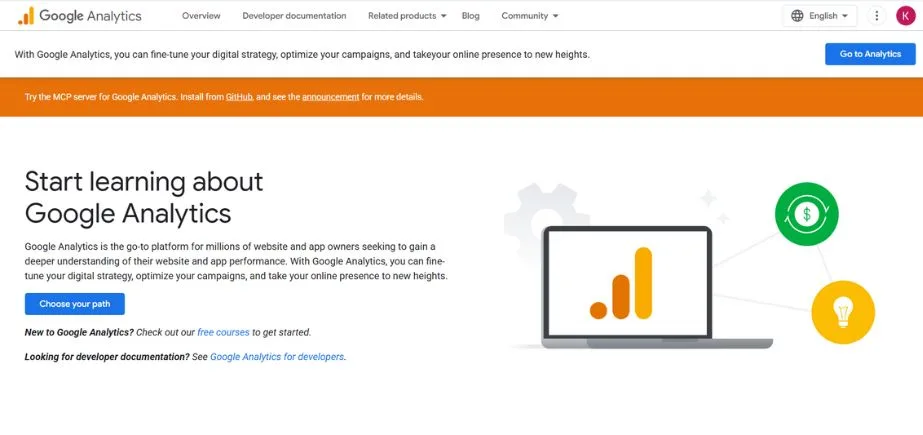
Google Analytics 4 (GA4) is one of the free content marketing analytics tools meant to help trace user activity on websites and apps. It provides event-driven tracking, artificial intelligence-driven insights, real-time reporting, and cross-device measurement. GA4 enables content marketers to know the interaction of the users with the content and the best-performing pages and to make the user’s journey more fruitful. Having been incorporated with Google Ads and BigQuery, GA4 is perfectly suited to data-driven decisions and performance marketing.
Core Features:
- Event-based tracking for detailed user interaction analysis
- Cross-platform measurement for web and mobile app content
- Advanced audience segmentation and demographic insights
- Goal tracking and conversion attribution modeling
- Real-time reporting and customizable dashboard creation
Pros:
- Completely free with robust feature set
- Integrates seamlessly with Google’s marketing ecosystem
Cons:
- Steep learning curve for beginners
- Limited customer support for free users
Pricing:
Free
2. HubSpot Marketing Hub
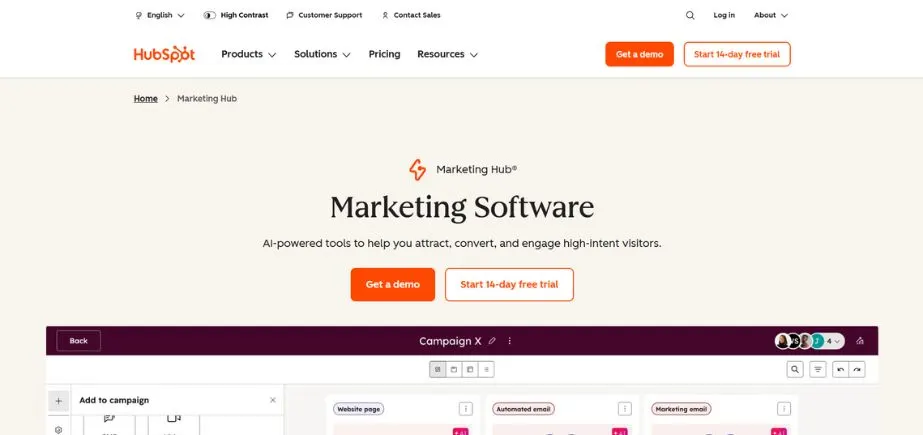
HubSpot Marketing Hub is amongst the popular content marketing analytics tools that provides powerful analytics, email marketing, building landing pages, and tracking content. It gives a profound taste of customer behavior and conversion funnel, as well as ROI. HubSpot CRM integration enables customers to monitor the role content plays in lead generation and guide them. With a customer-friendly dashboard, A/B testing, and SEO check, the dashboard is ideal to use by growth-centric marketing organizations.
Core Features:
- Content performance tracking across blog posts, landing pages, and social media
- Lead attribution and customer journey mapping
- A/B testing capabilities for content optimization
- Email marketing analytics and social media monitoring
- Integrated CRM for complete customer lifecycle tracking
Pros:
- Intuitive interface suitable for marketers of all skill levels
- Comprehensive inbound marketing toolkit beyond just analytics
Cons:
- Can become expensive as you scale up features and contacts
- Some advanced features require higher-tier plans
Pricing:
Starts at $45/month, with advanced plans up to $3,200/month
3. Semrush

Semrush is a full-scale SEO and content marketing solution that is famous due to keyword research, competitor spying, and content performance monitoring. It provides content auditing tools and traffic analysis tools and improves the ranking of articles. The topical research, the performance measurement, and the SEO templates are parts of the content marketing platform. Semrush can be best used by teams interested in getting more content visibility and organic growth, as well as beating rivals in search. This is one of the best content marketing analytics tools.
Core Features:
- Keyword research and ranking tracking for content optimization
- Content audit tools to identify performance gaps
- Competitive content analysis and market research
- Backlink monitoring and link-building opportunities
- Social media analytics and posting capabilities
Pros:
- Extensive keyword database covering global markets
- Powerful competitive intelligence features
Cons:
- Can be overwhelming for beginners due to feature density
- Higher price point compared to some alternatives
Pricing:
Plans start at $119.95/month, with enterprise solutions available
4. Ahrefs

Ahrefs is one of the content marketing analytics tools for search engine optimization and content to stand out among competitors and evaluate the keywords used, content marketing, and backlinks. Its Content Explorer tool connects the reader with the high-performing articles on a topic, determines social shares, and helps to identify content gaps. Ahrefs also monitors the ranking progress and discovers the defects in technical SEO. It suits content teams that are interested in organic expansion by relying on competition studies and link building.
Core Features:
- World’s largest live backlink database for link analysis
- Keyword research with accurate search volume data
- Content gap analysis to identify new opportunities
- Site audit tools for technical SEO optimization
- Rank tracking and SERP analysis capabilities
Pros:
- Industry-leading backlink analysis accuracy and depth
- Fast data updates and comprehensive global coverage
Cons:
- Premium pricing that may not suit smaller budgets
- Primarily focused on SEO rather than broader content analytics
Pricing:
Plans begin at $99/month for standard features
5. ContentSquare

Contentsquare is one of the best site and content marketing analytics tools that enables companies to follow how customers experience their content with heatmapping, replay, and zone-based analytics. It is more than conventional analytics and provides graphical data about user behavior, conversion barriers, and user engagement behaviors. ContentSquare is perfect for enterprise content teams that optimize page layouts, optimize user journeys, and boost their conversions using the data-driven decision-making process.
Core Features:
- Heatmaps and session recordings for visual content analysis
- Journey analysis to understand content consumption patterns
- Conversion optimization tools and funnel analysis
- Mobile app analytics for cross-platform content performance
- AI-powered insights and anomaly detection
Pros:
- Cutting-edge behavioral analytics that reveal user intent
- No code implementation for easy setup and deployment
Cons:
- Higher price point targeting enterprise customers
- Learning curve for interpreting behavioral data effectively
Pricing:
Custom enterprise pricing based on website traffic and features
6. BuzzSumo

BuzzSumo is a media intelligence application that helps to find out trending topics and articles with the greatest performance and influencers. It aids marketers in finding out what content works across channels and measures shares, backlinks, and sentiment. BuzzSumo is useful in terms of content strategy, idea generation, and competitive research. It has alerts and historical data insights, making it ideal to use by brands interested in creating viral content and streamlining their message.
Core Features:
- Content discovery and viral content identification
- Social media engagement tracking across multiple platforms
- Influencer identification and outreach capabilities
- Competitor content analysis and benchmarking
- Content alerts for brand monitoring and trend identification
Pros:
- Excellent for content ideation and trend discovery
- Comprehensive social media analytics across major platforms
Cons:
- Limited website analytics compared to comprehensive platforms
- Social media focus may not suit all content strategies
Pricing:
Plans start at $99/month, with enterprise options available
Explore More: Best Property Management Companies in San Mateo
7. Parse.ly
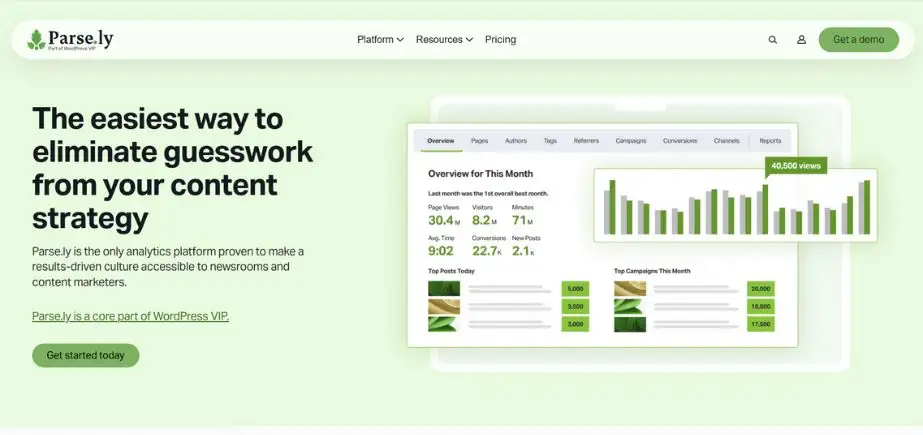
Parse.ly is one of the best publisher-specific content marketing analytics tools. It also gives up-to-date insights about the reader actions, the source of traffic, and the channel performance of content. The quick start guide provided in the Parse.ly user dashboard allows teams to maximize engagement, discover their success content, and prepare their editorial plans. It also has integration with CMS platforms and newsletters, which makes it the ideal name for data-driven storytelling and audience development.
Core Features:
- Real-time content performance dashboards
- Audience engagement metrics and loyalty analysis
- Content optimization recommendations based on data
- Social media traffic analysis and referral tracking
- Historical data analysis for long-term trend identification
Pros:
- Designed specifically for content publishers and media companies
- Real-time data updates for immediate performance insights
Cons:
- Primarily suited for content publishers rather than general marketers
- Limited SEO and competitive analysis features
Pricing:
Custom pricing based on monthly page views and features
8. Crazy Egg
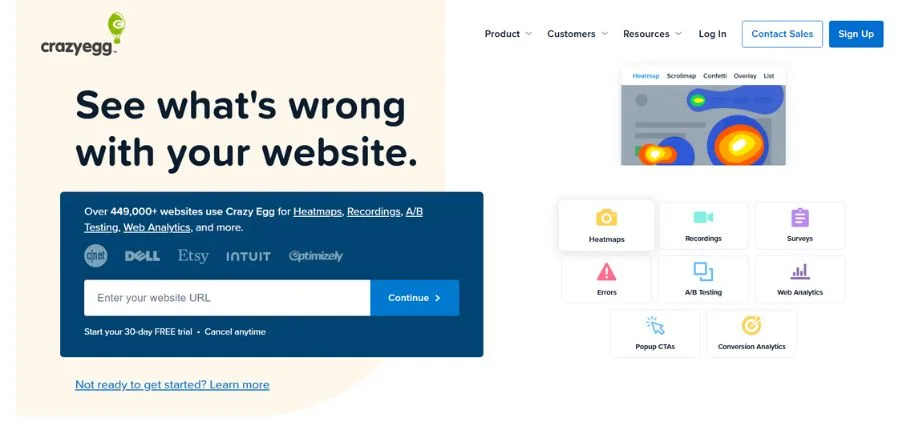
Crazy Egg is an A/B testing as well as visual content marketing analytics tools that allows marketers to visualize user interaction with their content in the form of heatmaps, scroll maps, and click reports. It shows the areas that lose attention and what people interact with and assists in enhancing conversion channels. Crazy Egg is particularly targeted at real-time insights on areas such as landing pages, blog appearance, and calls to action.
Core Features:
- Click heatmaps to visualize user interaction patterns
- Scroll maps showing how far users read content
- Session recordings for detailed user behavior analysis
- A/B testing capabilities for content optimization
- Conversion funnel analysis and optimization tools
Pros:
- Simple, visual approach to understanding user behavior
- Easy implementation with minimal technical requirements
Cons:
- Limited to website analytics without broader channel coverage
- Basic features compared to comprehensive analytics platforms
Pricing:
Plans start at $24/month for basic features
9. Moz Pro
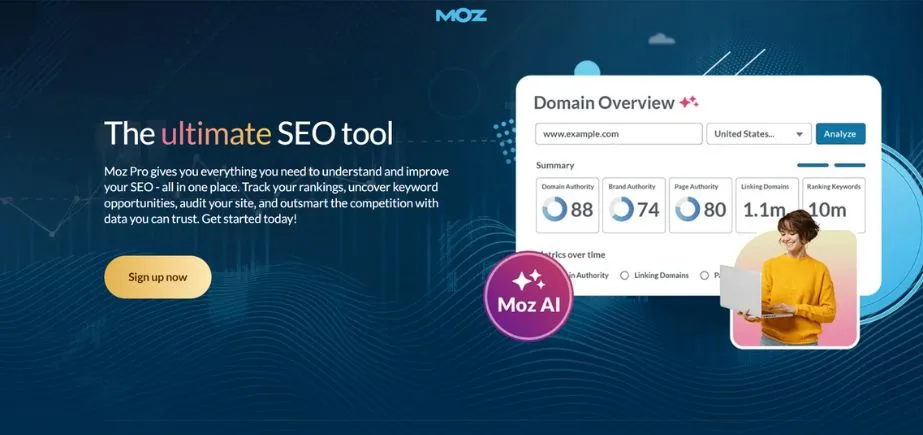
Moz Pro includes a package of SEO tools as an all-in-one project that helps conduct content marketing through keyword queries, site audits, backlinks, and page optimization. It contains the Content Optimization feature to assist the writer in enhancing on-page SEO and writing with better keywords. Moz Pro has strong SERP tracking and link analysis to help marketers perfect content strategies and improve search performance. It is easy to use and suitable for small and mid-sized marketing units.
Core Features:
- Keyword research and ranking tracking tools
- Site crawl and technical SEO analysis
- Link building tools and backlink analysis
- Local SEO features for location-based content
- On-page optimization recommendations and scoring
Pros:
- Trusted brand with excellent educational resources
- Strong focus on local SEO and small business needs
Cons:
- Smaller link database compared to competitors like Ahrefs
- Limited features outside of SEO-focused analytics
Pricing:
Plans start at $99/month for standard features
10. Databox

Databox is a dashboard, reporting, and analytics platform that gathers data in one place from different sources such as Google Analytics, HubSpot, Semrush, and others. It enables content marketers to monitor KPIs and create dashboards and content visualization. Databox is an advanced data analytics platform that provides mobile access and goal-setting and allows customizing reporting to keep teams on track and make quick content-related decisions based on data. Agencies and content teams that handle many tools and channels are ideal users of it.
Core Features:
- Custom dashboard creation with drag-and-drop functionality
- Integration with 70+ marketing tools and platforms
- Automated reporting and alert systems
- Goal tracking and performance benchmarking
- Mobile app for on-the-go analytics monitoring
Pros:
- Excellent for creating unified dashboards from multiple data sources
- Strong integration ecosystem covering most marketing tools
Cons:
- Primarily a visualization tool rather than a data collection platform
- Requires other tools for actual data gathering and analysis
Pricing:
Free plan available, paid plans start at $47/month
Understanding Content Performance Metrics
The selection of the appropriate analytics tool is not the whole struggle. It is also a prerequisite to know the measures that are most important to your content marketing objectives to lead to significant results.
Engagement Quality Over Quantity
Although page views and impressions give starting performance measures, pay attention to the quality-based engagement measures, such as time on page, pages per session, and scroll depth. These measures will show you specifically whether your material is actually appealing to the audience and whether it is useful.
Attribution and Customer Journey Mapping
Modern content marketing involves knowing how the various pieces of content contribute towards leading the prospects along the customer journey. Find tools that offer multi-touch attribution and let you know how the content drives conversions at various levels.
Content ROI Measurement
Ultimately, content marketing must drive business results. Show the effectiveness of your content effort by connecting the results with performance on revenues generated, quality of leads, and customer lifetime value.
Integration Strategies for Maximum Impact
Effective content marketing tools deploy a variety of tools that coordinate with one another to give profound information through all the available marketing channels.
Core Analytics Foundation
Use a powerful web analytics tool such as Google Analytics 4 as the base and add appropriate tools depending on your objectives and requirements. The strategy will make you feel secure with thorough baseline information coupled with more complicated knowledge in some areas.
SEO and Content Optimization Stack
General analytics should be coupled with some specialized SEO tools such as Semrush or Ahrefs to see how the content works in search results and how it can be optimized. Such integration assists you in producing the content that works well with the user as well as with the search engine.
Social Media and Distribution Analytics
Analyze content performance along with social platforms using such tools as BuzzSumo and notice the areas that can be used to distribute and amplify further. The social media analytics aid you in ensuring the content is shareable and goes viral.
How to Choose the Right content marketing analytics for Your Needs
The choice of the best content marketing analytics tool is determined by five major factors that can be aligned with your business goals and operational needs.
Define Your Primary Content Goals
Begin by defining your calling for your content marketing activities. The main goal of yours is to drive organic search traffic, generate leads, create brand awareness, or engage your customers more? The main objectives of your business must determine what capabilities of analytics to focus on.
Assess Your Team’s Technical Capabilities
Examine the level of proficiency in your team and the extent to which they can incorporate. There are those that offer great functionality and are more complex to master, such as Google Analytics 4, or easier to learn, such as HubSpot.
Evaluate Your Marketing Technology Stack
Examine your current tools and solutions to find out the integration needs. The optimal analytics tool must also be able to easily integrate with your content management system, email marketing vendor, CRM, and other key marketing solutions to give you a single view of your business.
Consider Budget and Scaling Requirements
Analyze both current budget constraints and future scaling needs. There are tools that can be great investments in expanding businesses but can make you pay a lot more when you scale, as well as those that can justify the higher price of enterprises.
Test Before Committing
Use free trials and demo deals to test the suitability of the available tools to suit your needs. Such first-hand experience proves to be priceless in terms of knowing which platform can be useful in terms of garnering the best insights into a content strategy.
Final Thoughts
Content marketing analytics packages have grown to be effective platforms providing insights into audience behavior and performance of the content, as well as returns on investment (ROI). All tools given in this guide are the best tools in 2026, depending on their services for various content marketing purposes.
To monitor the engagement, user behavior, and the hottest topics, Google Analytics 4 and tools such as Crazy Egg or BuzzSumo are an affordable solution for small businesses. Sales promoters could desire integrated solutions such as HubSpot Marketing Hub in order to have an analytical tool and automation functions along with the package on content management.
Advanced instruments, which may include Semrush or Ahrefs to get some SEO information, or ContentSquare to gain behavioral data, should be considered by larger organizations with a more complicated strategy. Your objectives, team skills, and content plan determine the right tool you should use.
Nevertheless, no matter how advanced a tool is, it will only work when you take action based on the insight it offers. The key to that shift of content into measurable business outcomes is regular analysis and constant optimization.
Analytics is increasingly becoming predictive and actionable due to AI and machine learning, now featured in most tools. Keep up to date on tool updates, review your analytics strategy on a regular basis, and scale your tools alongside your content requirements.
Content marketing needs creativity as well as analytics to be effective. These give a basis to experiment with ideas and perfect approaches and expand on what works. A suitable and worthy content analytics tool can even make your marketing campaigns an engine of sustainable growth.
FAQs
1. What are content marketing analytics tools?
The content marketing analytics tools assist in following, measuring, and analyzing the performance of the content across digital channels. They give information on user behaviour, traffic sources, engagement rate, and conversions, as well as returns on investments, and enable an accurate data-driven decision based on this information by the marketer.
2. What are the best content marketing analytics tools when it comes to content that targets SEO?
SEO content can be used with tools such as Semrush, Ahrefs, and Moz Pro. They provide keyword monitoring, backlink analysis, competitor comparisons, and tracking to facilitate better sorting of content to appear in the searches and gain natural growth.
3. What are the factors to consider in selecting the correct content marketing analytics tool?
There are a number of factors to consider when selecting a correct content marketing analytics tool for your business.
Think about your business size, objectives, direction, and technical requirements. Younger groups of people could rely on instruments such as Google Analytics 4 or BuzzSumo, whereas bigger businesses may be required to use more sophisticated platforms, such as HubSpot, ContentSquare, or Parse.ly, to generate more profound connections and reports.
4. Will content marketing analytics enable one to monitor the performance of the content on various platforms?
Yes, the majority of tools present multi-channel tracking. Data from different sources, such as websites, email campaigns, or social media, is collected by platforms, such as Databox or HubSpot, to present a unified dashboard to check the performance of the content.
5. What makes content marketing analytics necessary for marketers?
Marketers can use content analytics to know the kind of content that their audience identifies with, the channels that work, and how to tweak their strategies to experience a better ROI. In the absence of data, scaling content, which works, or repairing what does not take off can be hard.
Continue Exploring: Top TaskRabbit Alternatives