

The Surat Chennai Expressway is one of the attestations to the great Indian dream of developing the infrastructure that is of world-class quality, and that is able to efficiently link the major economic hubs of the country. This is a revolutionary project that is not only a road but a highway of opportunities that will change the face of connectivity between western and southern India. It was an incredible structure, 1,271 kilometers long and covering six states. Spanning across six states, this is an extraordinary engineering ride that will transform trade, commerce, and development in the region.
The Surat Chennai Expressway Route Map that has an estimated investment of ₹45,000 crore is set to become the second-longest expressway in India and will significantly shorten the travel time, which was 35 hours to a mere 16 hours and the distance that was previously covered by a distance of 300 kilometers to a distance of almost 16 kilometers making it a cornerstone project in the national Expressway development history.
What Is the Surat-Chennai Expressway?
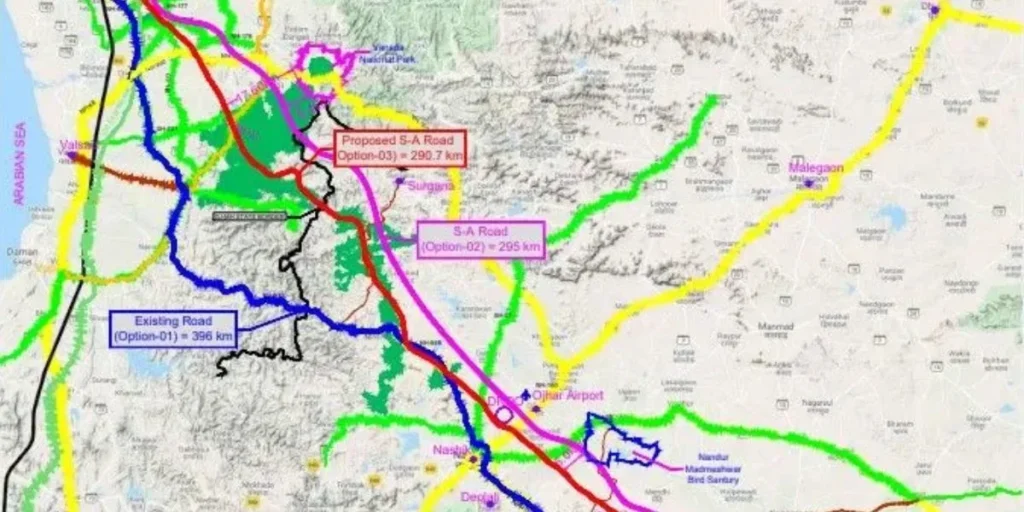
The Surat Chennai Expressway Route Map is a proposed, access-controlled, 6-lane expressway that is set to develop a high-speed connectivity channel between Surat and Chennai. This expressway is managed by the National Highways Authority of India (NHAI); it will cross Gujarat, Maharashtra, Karnataka, Telangana, Andhra Pradesh, and Tamil Nadu linking many industrial hubs, agricultural centers, and cultural landmarks.
The project will support the quicker transportation of goods and people, and enhance economic activity in the areas it will serve, and greatly decrease logistics expenses and environmental effects by optimization of routes.
Quick Facts
- Total Length: 1,271 km (790 miles)
- Number of Lanes: 6-lane access-controlled highway
- Starting Point: Surat, Gujarat
- Ending Point: Chennai, Tamil Nadu
- States Covered: 6 (Gujarat, Maharashtra, Karnataka, Telangana, Andhra Pradesh, Tamil Nadu)
- Estimated Cost: ₹45,000 crore (approximately US$5.5 billion)
- Travel Time Reduction: From 35 hours to 16 hours
- Distance Saved: Approximately 299 km shorter than current route
- Ranking: Second longest expressway in India
- Maintaining Authority: National Highways Authority of India (NHAI)
- Expected Completion: December 2026
- Type: Access-controlled expressway with limited entry and exit points
Major Cities on the Route
| State | Major Cities/Towns |
| Gujarat | Surat |
| Maharashtra | Nashik, Ahilyanagar, Barshi, Dharashiv, Solapur |
| Karnataka | Kalaburagi, Yadgiri, Raichur |
| Telangana | (Transit sections) |
| Andhra Pradesh | Kurnool, Kadapa, Rajampet, Tirupati |
| Tamil Nadu | Chennai |
Route Map & Alignment
The Surat Chennai Expressway Route Map is designed with a strategic alignment that is designed to maximize connectivity and reduce its impact on the environment. The route is well planned to link major industrial and commercial hubs which will form two separate economic corridors which will act as growth engines in development of the region.
Section 1: Surat – Solapur Economic Corridor
This part starts at Surat, the diamond city and textile capital of Gujarat, and then cuts across the agriculturally rich and well-industrialized parts of Maharashtra. This corridor covers such cities as Nashik(wine-producing), Ahilyanagar, Barshi, and Dharashiv, and ends at Solapur, providing unparalleled opportunities to industries and agricultural exports along the way.
Section 2: Solapur – Chennai Economic Corridor
The expressway starts at Solapur and then proceeds southward through the Kalaburagi, Yadgiri, and Raichur districts of Karnataka and finally crosses over to Andhra Pradesh. It links the temple city of Tirupati and industrial hubs such as Kurnool and Kadapa, and then goes all the way to Chennai, the automotive and IT capital of Tamil Nadu, and therefore, establishes an entire western-to-southern India connectivity network.
Villages & Localities on the Expressway Alignment
- Gujarat Region: The expressway will serve many villages around Surat and rural people will have an improved access to the urban markets as well as generate employment in the logistics and other related services along the path.
- Maharashtra Belt: Improved access to hundreds of villages in Nashik, Ahilyanagar, Solapur and the neighboring areas will serve farmers better by facilitating their transportation of produce and industrial investments in areas that had received limited attention.
- Karnataka Stretch: Villages in the districts of Kalaburagi, Yadgiri, and Raichur will be transformed to have agricultural business potentials and there will be prospects of small scale industries in the villages.
- Andhra Pradesh Zone: Crossing the Kurnool, Kadapa, Rajampet, and Tirupati districts will cover many villages, allowing modern infrastructure to reach the rural areas and allow the local residents to access healthcare, education, and even business centers more easily.
- Tamil Nadu Approach: The villages situated on the Chennai approach route will be urbanized and developed very fast and the expressway will serve as a booster to the real estate business and hence development of the areas as a residential and commercial place.
Completion & Opening Date
The Surat Chennai Expressway Route Map is a mega-project that has a staged completion process up to December 2026. The construction itself is being executed in several locations simultaneously in the various states, with NHAI working to coordinate efforts and deliver quality and timely results.
Although it is anticipated that the entire expressway will be in operation by 2026, some parts of the expressway will become operational sooner as they are completed, and some benefits will start to be enjoyed even before the entire corridor is operational. The long time frame explains the gigantic size of the project, the complicated process of land acquisitions, and the necessity to build thousands of bridges, tunnels, and interchanges.
Benefits of the Surat Chennai Expressway
- Time Savings: It saves time or about 35 hours that are spent in traveling between Surat and Chennai to only 16 hours thus saving almost 19 hours to long-distance travelers and commercial transport.
- Distance Reduction: Will save roughly 299 kilometers over the current routes, which will save enormous amounts of fuel and lower the cost of vehicle maintenance to all users.
- Economic Growth: Enhances a strong economy that links the industrial centers in Gujarat, Maharashtra, Karnataka, Andhra Pradesh and Tamil Nadu, allowing the goods to move freely and enhancing the inter state trade relations.
- Logistics Efficiency: The efficiency level of the supply chain improves dramatically to industries by lowering transportation expenses and providing just-in-time delivery systems that make businesses more competitive and profitable in any industry.
- Creation of Job: Thousands of direct and indirect jobs are created during the construction and operation period, which creates opportunities in the hospitality, retail, logistics and maintenance services along the expressway corridor.
- Regional Development: Introduces development to smaller towns and rural areas along the road, decreasing the urban-rural inequalities and generating new economic opportunities in hitherto underrepresented regions due to the better connectivity.
- Environmental Value: Optimized routing and a decrease in the travel distance will mean lower fuel consumption and a decrease in carbon emissions; it will give a boost to environmental sustainability, and yet offer high-speed connectivity to help the economy grow.
- Tourism Boost: Makes tourist destinations accessible Nashik, Tirupati and other cultural sites are now accessible to tourists and this assists in the promotion of tourism and the industries associated with it besides making the journey much more convenient and time saving to the tourists.
Construction Status & Latest Updates
Surat Chennai Expressway Route project is moving forward on various fronts where NHAI is busy with land acquisition, preparing project reports, and contractor bids on different parts of the project. Some of the stretches are already at the construction stage and earthwork, bridges, and grade separators are being built.
Efficient planning and allocation of resources have reduced the project cost that was initially estimated at ₹50,000 crore to ₹45,000 crore. Constant inspection and quality control is made to make sure that the construction is according to international standards and the environmental clearances are taken systematically to various sections to keep the ecological level balanced.
Surat Chennai Expressway: Impact on Real Estate
- Appreciation of property value: There is a massive appreciation of real estate in regions close to the expressway and lands adjoining interchanges and access points are quite valuable in constructing commercial and residential development projects.
- Development of commercial hubs: New commercial centres, warehouses and logistic parks are being created along the corridor that are transforming areas that used to be underdeveloped into modern business centres and are much attracting corporate investments in infrastructure.
- Residential Township Growth: Real estate developers are now introducing integrated townships along the access points of the expressway networks with state-of-the-art facilities and promising great connectivity, thus appearing to be an ideal place to own a home by homebuyers who want quality living with easy access.
- Industrial Real Estate Boom: The expressway is creating demand in the industrial land and warehousing space whereby companies are setting up manufacturing plants and distribution centres to take advantage of the good connectivity and low logistics costs.
- Investment Opportunities: The corridor has offered good investment opportunities both in commercial and residential real estate business and those who have been investing in the field early will gain immensely as the expressway approaches completion and starts operating.
- Infrastructure Development: The development of infrastructure such as hotels, petrol pumps, restaurants, and service stations is on the way up the route providing more real estate and job opportunities as well as improving the general travel experience.
Conclusion
Surat Chennai Expressway Route is a radical infrastructure venture that will rebrand interconnectedness and economic integration between the western and southern India. Connecting the key industrial and business interests in six states with the help of the modern high-speed route, this expressway will trigger economic development, decrease logistics expenses, and enhance the quality of life of millions of people.
This project has a ₹45,000 crore investment, which indicates the government interest in creating world-class infrastructure that is supporting the growth story of India. The Surat Chennai Expressway is surely going to become an artery in the transportation system of India and the stability of the Indian economy in terms of easing trade, regional progression and enhancing connections between various cultures and economies of the country as construction continues until 2026.
Also Read:
FAQs
What is the approximate time of completion of Surat Chennai Expressway?
The expressway is projected to have full operation by December 2026 but some parts can be opened earlier when they are completed.
How much is the overall cost of Surat Chennai Expressway?
The project is being undertaken at a cost that is estimated to be ₹45,000 crore as compared to the previous project estimated cost, which was ₹50,000 crore.
What will be the time saved by the expressway?
The Surat Chennai route Expressway will save about 19 hours of traveling time, which would have been reduced to 16 hours.
What are the states on which the Surat Chennai Expressway is passing through?
The expressway is traversed by six states of Gujarat, Maharashtra, Karnataka, Telangana, Andhra Pradesh and Tamil Nadu.
What is the entire length of the Surat Chennai Expressway?
The Surat Chennai Expressway has a total length of 1,271 kilometers (790 miles), which is second-longest in India after the Delhi-Mumbai Expressway.