


Home purchase is considered to be one of the most significant financial choices people make, and it is imperative to know the actual worth of a property. Today, customers do not need to use agents or appraisers only. The current state of online property valuation is that the estimation of value is quick; large datasets, machine learning, and live market data are used to make property estimates, which in turn assist in making wiser purchasing decisions.
Such tools are often referred to as Automated Valuation Models (AVMs) and enable home buyers to look up the price of the property immediately, compare house prices with others of similar value, and monitor the price movements over a period of time. It will be easier to position competitive offers and not overpay, and find out potentially undervalued property.
The valuation instruments are, however, diverse in accuracy and methodology. Various data sources, frequency of update, and geographical strength may produce different estimates of the same home. To be able to use the tools, it is important to be aware of their weaknesses.
In this guide, the best eleven home purchase property valuation tools are reviewed based on their features, accuracy, and the best cases of application in 2026. The tools are very helpful, but they are not to substitute professional appraisals, inspections, and professional advice because they are not capable of reflecting the unique situation of a property and its beauty.
1. Zillow Zestimate
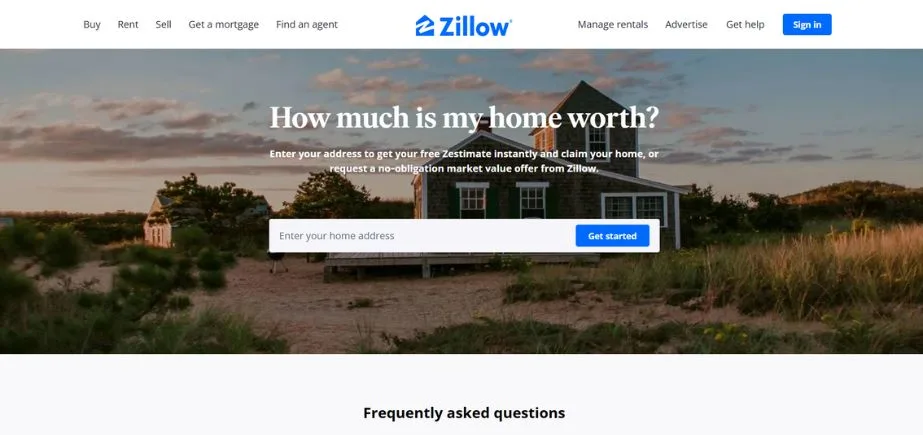
The Zillow Zestimate is possibly one of the best-known online property valuation tools, with estimated market value being supplied on nearly 104 million houses in the United States. The Zestimate algorithm evaluates a wide range of data points like public records, tax assessments, similar homes sold in the recent past, and information provided by users themselves regarding home improvements and features. The most useful feature that Zestimate offers to home buyers is its convenience and the other information that Zillow offers with the estimate, such as the history of the house, the neighborhood information, and the local market trends.
The site is continually updated with the estimation, and the homeowners are able to claim their properties in order to give more information that can enhance accuracy. Although there have been times of criticism on accuracy variations based on the market and type of property, Zillow has kept on improving its algorithm, and Zestimates is a tool that most home buyers researching the value of a property use as a starting point.
Key Features:
- A coverage of about 104 million homes in the country.
- Blinking with detailed property history and property taxes.
- Interactive map with estimated values of the nearby properties.
- Historical value trends display the way in which estimates have varied with time.
- Homestayers also have the capability of updating property information so as to make it more accurate.
Best for:
House buyers want a fast, convenient estimate of prices and a much broader context of information about communities and real estate trends.
Website:
zillow.com
2. Redfin Estimate

Redfin Estimate has also gained a reputation for offering some of the most precise automated estimates in the industry, which are backed by advanced machine learning algorithms that factor in both publicly available information, along with real-time information of Redfin being actively involved in real estate transactions. In contrast to platforms that merely aggregate data, Redfin is a brokerage, and they can access MLS data and on-the-ground market intelligence, which is input into their valuation models. Redfin Estimate is updated several times per week, which means that buyers can get valuations that show the recent movement of the market.
They are especially accurate in markets that Redfin is heavily represented in, since its algorithms have the advantage of the built-in feedback measure of actual transaction data. Home buyers like the fact that Redfin has been able to be transparent regarding its accuracy rates, which it publishes on a market-by-market basis, as well as confidence scores indicating how reliable a given estimate would be based on available information.
Key Features:
- ML algorithms that include real-time MLS and real-time transaction data.
- Reflective updates on the current market are made several times a week.
- Published accuracy numbers by market median error rates.
- Confidence scores showing the estimated reliability of each property.
- Close connection with the Redfin home search and touring services.
Best for:
Buyers who place value on accuracy and those who prefer estimates that are supported by real transaction data, especially in markets where Redfin is operating.
Website:
redfin.com
3. Realtor.com

Realtor.com uses direct access to Multiple Listing Service (MLS) data to give property valuations that are based on the latest and most up-to-date information in the real estate business. Being the official site of the National Association of Realtors, Realtor.com can access listing information that is updated frequently compared to many other competing sites that often take several minutes before listing information updates in the MLS are reflected on the site. The accurate valuation at any given point in time is the necessity of this real-time data integration because the algorithms of the platform can instantly update their estimates with new listings, new changes in prices, and closed sales.
The estimator of home values on the site takes into account recent similar sales, the active sales currently in the market, and past trends so as to produce estimates which are more likely to be very accurate, especially in a strong market where MLS data is well established. In addition to the simple valuations, Realtor.com offers buyers a wealth of market data, such as days on market data, inventory, price trend data, etc., which can be used to contextualize individual property estimates.
Key Features:
- MLS data is accessed directly and updated every day of the week.
- Algorithms of valuation that use the latest listing and sales data.
- Complete a similar sales report of similar properties.
- Trend in the market, giving background of single property estimates.
- Active listing and contact details integration with agents.
Best for:
Home buyers who require valuations that are based on the most up-to-date market data and authoritative MLS data.
Website:
realtor.com
Explore More: How Get Unlimited Real Estate Leads
4. Trulia

Not only does Trulia offer property valuation, but it also features an extensive neighborhood context that allows buyers to know the aspects that determine the value of a home. The estimations through the platform consider elaborate data on the neighborhood activity, local facilities, school rankings, crime rates, and community features, in addition to the conventional valuation factors such as similar sales and property attributes. This holistic mode has appreciated the fact that the value of a home is inseparably connected with its location and its immediate environment.
The interface of Trulia enables a buyer to get heat map views of different properties of the neighborhood, such as commute times and noise levels, to get to know whether the estimated price of a certain property properly reflects its location benefits or drawbacks. The site is also useful in making inferences into market pace, displaying the rate at which homes in particular locales are being sold and whether it is a purchaser or a seller market in that locality.
Key Features:
- An extensive local study combined with house prices.
- Heat maps of amenities, schools, crimes, and other factors of location.
- Interior feature evaluation with regard to finishes and renovations.
- Market speed metrics indicate the rate of property sales in the area.
- Community knowledge, such as walkability rates and lifestyle.
Best for:
Buyers who would like to know not only the value of a property but also the nature of the neighborhood that would affect the value of the property.
Website:
trulia.com
5. Homes.com
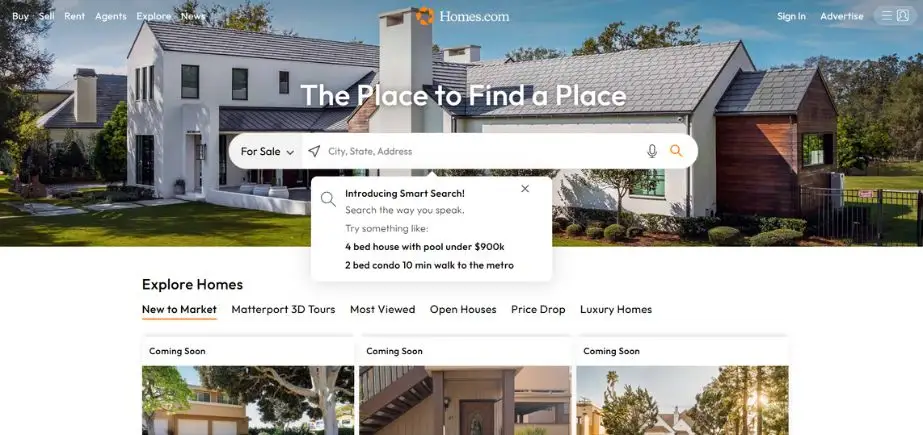
Homes.com is amongst the most powerful property valuation tools, which uses the combination of active listing prices and closed sales to produce the estimates using a simple, user-friendly interface. The estimator of the platform is user-friendly, and the buyer, regardless of their level of experience, can get value estimates in just a few clicks without struggling with complicated functionality and excessively detailed presentations. The difference between Homes.com and other market research websites is the simplicity with which the data is presented without compromise to the accuracy- the algorithms used take into account all the data on the market, but the presentation of this information is done in a clear and easily comprehensible manner.
The site offers buyers price ranges of around 10 percent in place of one-point price estimates, reflecting the fact that automated valuations are chancy and providing buyers with a more accurate idea of where the value of a house is likely to be. This range-based technique can also be useful, especially in making decisions when it comes to offering or how much space there may be in the negotiation.
Key Features:
- User-friendly and clean design.
- Estimates with realistic ranges of the valuation.
- A combination of active listing and closed sales information.
- Homes that are similar can be seen in displaying a simple comparable property.
- History of property and other features readily available.
Best for:
Individuals buying a house for the first time or those who do not like complicated tools and data overload.
Website:
homes.com
6. Eppraisal

Eppraisal offers rapid estimates of property values that are not limited to particular properties but offer more information about the local market trends and the neighborhood values. The site will be fast, providing real-time estimations that assist customers in evaluating the reasonableness of the price obtained for a property with regard to the market they are in, within the shortest time possible. Another feature that renders the Eppraisal most useful is the comparative analysis feature. When you are estimating the value of a property, the tool automatically displays estimations of other properties within the immediate vicinity, and this allows you to observe trends and outliers.
This is the neighborhood view that enables the buyers to have a clear picture of whether a given property is over-priced or under-priced compared to the average in the area and whether they can get a better deal elsewhere. The simplicity and speed of property valuation tools like Eppraisal make it suitable for initial research when buyers are touring various neighborhoods or evaluating various properties in haste.
Key Features:
- Quick, instant value-based estimates with low input.
- Neighborhood comparison with automatic calculation of property values.
- Indications of market trends in the local market and price fluctuations.
- User-friendly interface for fast evaluation.
- Residential property coverage throughout the majority of the U.S. markets.
Best for: :
Buyers who have done preliminary research on several properties and neighborhoods and are in need of quick comparative information.
Website:
eppraisal.com
7. Chase Home Value Estimator
The Chase home value estimator uses the vast mortgage and property database presently managed by one of the largest financial institutions in America to give detailed property valuation reports at no cost. The tool has the advantage of Chase having a special status as one of the largest mortgage lenders, providing them access to extensive financing data, appraisal data, and transaction information that are used as inputs into their valuation algorithms. The estimator prepares reports beyond the estimated value, but containing confidence intervals, similar sales analysis, and property location-specific data on the market trend.
The home value estimator links directly with mortgage pre-approval and financing solutions to give buyers an easy and uninterrupted experience of researching a property and continuing through to close when they already have an existing relationship with Chase, be it in banking or mortgage services. The estimates are especially high in markets where Chase has high lending operations, since the algorithms would be fed with new transaction information.
Key Features:
- Free detailed valuation reports based on a wide range of mortgage data.
- Confidence intervals that show the reliability of estimates.
- Merging with Chase mortgage and pre-approval services.
- Similar sales analysis and similar property details.
- Market trend data of local price movements.
Best for:
Customers who desire detailed valuation reports provided by a reputed financial institution, and in particular those who are looking to finance their mortgage with Chase.
Website:
chase.com
8. RE/MAX

The RE/MAX valuation program integrates the extensive market information with the knowledge of the company’s vast network of local real estate agents to come up with estimates that are based on statistical analysis as well as real market knowledge. RE/MAX, being one of the largest real estate franchises in the world, has agents with an in-depth understanding of almost all markets in the world, and this local knowledge guides their valuation strategy.
The instrument takes into account the typical valuation aspects, such as similar sales and property features, yet the valuations are enhanced by the fact that RE/MAX agents know the localities, future developments, and district changes, and other variables, which may be overlooked by certain algorithms. Customers with the RE/MAX tool may usually get a chance to communicate with local agents who may offer more insight on the estimate and clarify market conditions that may make certain properties worth more or less than what the automated estimate indicates.
Key Features:
- Local agent market knowledge, Valuation algorithms.
- Personalized insight where there is direct contact with RE/MAX agents.
- Detailed market statistics of one of the biggest real estate networks.
- Characteristic analysis of property, taking into consideration characteristic features.
Best for:
Those who buy will have automated estimates and the option of having specific guidance provided to them by professional local agents.
Website:
https://www.remax.com
9. PropertyShark
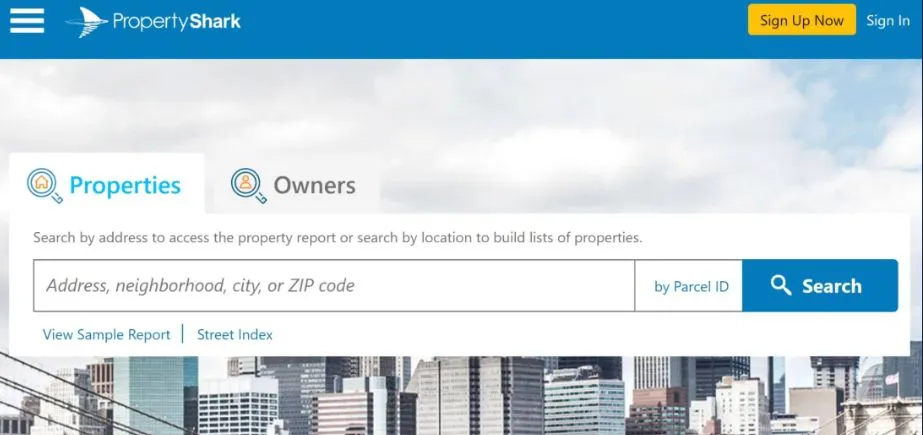
PropertyShark has grown to be a strong research technology that is extensively utilized by real estate professionals, investors, and serious buyers who require detailed property intelligence with more than simple valuations. The site offers intricate reports that comprise approximated values, property features, ownership records, sales records, tax evaluations, liens, and comprehensive similar sales information. The difference between PropertyShark and its competitors lies in the level of information that is on the site- the site is a compilation of various public records, meaning that an individual can conduct due diligence of any property.
The similarities in sales analysis are even stronger, and the buyers can specify the search criteria and see the detailed information about each company used in the valuation. To consumers who have a more analytical mind when coming to real estate buying, or to buyers who are thinking about purchasing something that requires more scrutiny, PropertyShark offers research functions on the professional level.
Key Features:
- Detailed property reports, such as lien and ownership.
- A wide range of similar sales information and a comprehensive search.
- Additional property characteristic information that is usually included.
- Transaction history and sales history over a long period of time.
- Research tools of professional grade, as used by professionals in the industry.
Best for:
The type of buyer is analytical, an investor, or a buyer of property that requires a lot of due diligence and investigation.
Website:
propertyshark.com
Also Read: Best Highest Paying Real Estate Jobs
10. RealQuest Express
CoreLogic operates the RealQuest Express, which provides professional-grade property valuation reports utilizing its leadership in the data and analytics industry, and the value of the property report is also based on one of the largest property databases in the United States. CoreLogic handles billions of property records every year, and this huge data system is the basis of valuation models at RealQuest. The site offers comprehensive reportage that contains estimated market values, automated valuation model confidence rating, property features, sales comparables, and the trend analysis of the market.
The valuations of RealQuest are especially accurate since the algorithms of CoreLogic are constantly supported on the basis of real appraisal data and closed transactions. Mortgage lenders, real estate professionals, and appraisers have confidence in the platform, and it is becoming more available to individual home buyers to enable them to make purchasing decisions that are institutionally quality in terms of valuation information.
Key Features:
- CoreLogic analytics and databases of property power this.
- Mortgage and appraisal professionals use high-confidence valuations.
- Expansive and similar point of sale analysis.
- The information on property characteristics is based on extensive public records.
- The scores of valuation confidence show the reliability of the estimates.
Best for:
B-2-B buyers looking to receive institutional quality valuation with industry-leading data and analytics support.
Website:
corelogic.com/products/realquest-express
11. LoopNet

Although LoopNet is mainly considered a commercial real estate site, it provides useful information to residential and mixed-use property buyers who may be interested in commercial advancement of a particular area. The large database of market data and commercial property on LoopNet can give background to the residential property values in the urban locations where the commercial and residential real estate are so intertwined.
The valuation tools of the platform take into consideration such factors as proximity to commercial amenities, development patterns, and general economic activity of the regions, which may have a considerable effect on the residential property prices. In the case of buyers who are interested in seeing downtown districts, areas around large commercial runs, or neighborhoods that are being revitalized through commercial use, LoopNet is a better market intelligence than purely residential tools would convey. The site is especially useful when it comes to assessing multi-family property or property of mixed residential and commercial purposes.
Key Features:
- Complete data on commercial property and the market.
- Gravity in the patterns of commercial development influences the residential prices.
- Mixed-use and multi-family property valuation instruments.
- Many similar analyses on non-traditional residential properties.
- Market information is created about economic vitality and trends of development.
Best for:
Buyers wanting multi-family property, mixed-use buildings, or residential property located in a commercially active location.
Website:
loopnet.com
Fair Value with Multiple Property Valuation Tools
Although there is much to be learned in each of the described property valuation tools, smart home buyers are aware of the fact that none of the automated valuations can be considered as the final word. The best solution is to apply several tools and contrast their estimates, seek agreement, and explore any notable differences.
The more reputable tools that offer similar values on a property, the more confidence you have in the estimated range of value being reflective of market value. On the other hand, in case estimates are very different, this is an indication to do some probing: maybe a property imposes its own peculiarities on any algorithm, or maybe there is a lack of similar sales in the region.
You can consider making a basic spreadsheet in which you can enter estimates made by various tools, the date the estimate was made, and an average. The process itself requires just a few minutes per property, yet it offers a stronger valuation image than using any of the single sources.
Not only listen to the estimates but also listen to the confidence scores and range of estimates that many tools will give, and a tool that has high confidence in its estimate should get more weight than one that is very uncertain.
It is worth remembering that no automated valuation can be considered completely free. Property valuation tools are usually unable to explain fluctuations in the condition of the property, recent upgrades, deferred maintenance, architectural peculiarities, premiums on the view, or location benefits that are not reflected in standard data fields.
Homes in neighborhoods where recent sales have been minimal can also be estimated less reliably since there is a low amount of data that algorithms can use to predict their price. Unique properties or custom homes will normally be given inaccurate automated valuations as compared to standard tract homes.
These property valuation tools do not substitute professionally undertaken appraisals, nor do they substitute expert agent advice, but rather aim to provide you with pieces of information allowing you to ask better questions and make more informed decisions.
To find out which properties may be overpriced compared to the comps, to get to know the trends in the market in certain areas you are thinking of buying, and to have an idea of what to expect when making an offer, use them. Next, add automated estimates to these estimates. The expert touch of a skilled buyer agent, who knows the local market, can tell you why a given property will fetch higher/lower than what online tools will tell you.
Frequently Asked Questions
Q: How reliable are online property valuation tools compared to professional values?
The median error rate of online property valuation tools is usually between 2-8% with respect to the market, type of property, and the tool. Physical inspection and taking into account the factors that cannot be automated through the help of the mentioned tool, professional appraisals tend to be more precise but expensive and time-consuming.
Online property valuation tools can be very helpful to home buyers in their preliminary research and negotiation by offering good estimates, but lenders will demand professional evaluations before mortgages are given. Consider online tools as a user-friendly guide but not a conclusive answer, which means that they are best suited to normal properties in active markets with robust, similar sales data.
Q: Can you tell me why various property valuation tools are coming up with different values for the same property?
Various property valuation tools utilize different data sources, algorithms, and update rates, which, of course, causes a variation in estimates. There are those tools that include more recent sales information, others use property characteristics weightings differently, and others are more focused on specific markets.
Within the range of 5-10% differences among property valuation tools are the norms rather than an indication that one or another tool is incorrect; they represent alternative methodologies and data feeds. Big deviations (differences of 15% or more) indicate that you may need to dig deeper since the property might be special or just have a few similar sales that can be compared to it, and automated valuation is difficult.
Q: Is it possible to use property valuation tools to make an offer on a house?
Never use property valuation tools as dictators of your offer approach. Various tools should be used to determine a fair range of values; however, you should also take into account the prevailing market conditions, the amount of time the property has been on the market, similar listings, and suggestions of your real estate agent. To buy a property in competitive markets, you might be required to provide higher values than the estimated values.
In sluggish markets, one might be able to bargain less than estimated. It is important to keep in mind that it is ultimately the price that buyers are willing to pay and sellers are willing to accept, which defines value. At times, estimates may provide context, but should not make you completely disregard what the property may be worth to you.
Q: Can property valuation tools be used to determine values in rural locations or small towns?
In rural areas, small towns, and in neighborhoods where few comparatively recent sales have taken place, the automated valuation tools are less precise due to a lack of similar transactions to run the algorithms. Automated property valuation tools are especially difficult in the case of properties on large lots, farms, or unique rural properties. Even local real estate agents and appraisers who have expertise in particular areas are even more significant in these markets. You need not ignore online ballpark estimations, but exercise more caution about them, and rely more on local professional advice.
Q: How frequently should I monitor the prices on property valuation tools when I am house hunting?
Test values upon earlier identification of properties of interest and immediately before you make an offer, since the market can change rapidly. Most of the bigger property valuation tools, such as Zillow and Redfin, update estimates at least once a week, so to keep on top of the trends, you can do so by checking monthly or after major events in the market (interest rate changes, new similar sales).
Nevertheless, do not monitor estimates on a daily basis like a hobby; however, minor variations are normal and may not reflect an actual change of value. You should employ valuations strategically at critical decision points instead of employing them as a continuous monitoring instrument, and you should always bear in mind that the estimate you have when you make an offer is more generous than historical values.
Continue Exploring: Best Property Management Software For Small Landlords