


In the modern digital society, businesses are supplied with a massive amount of data daily. Websites, mobile applications, social media, and a variety of other sources provide this information. The collection of information is not the goal. The real dilemma is the system for managing, organizing, and using this data. This is where Data Management Platforms are used. These are powerful tools that can help businesses store, organize, and intelligently use their data. Whether you run a small business or a large company, understanding Data Management Platforms can help you make better decisions and grow your business faster.
What are Data Management Platforms?
Data Management Platforms refer to special computer programs that enable companies to collect, plan, and organize huge amounts of data in multiple sources. Think of them as a giant warehouse of your business data, which is stored in an organized way. These platforms collect data on your web-based traffic, customers, and social media followers, and consolidate it all in one platform.
The main job of Data Management Platforms is to make sense of all this information. They clean the data, remove duplicates, and organize it in a manner that you can easily find what you want. They are also there to enable you to know your customers better since they expose their behavioral patterns. You can use the example of what people love the most, when they like shopping, or what sort of content they like.
Key Features to Look for in Data Management Platforms
- Integration Abilities Data: Good Data Management Platforms should connect easily with your existing tools and gather data from multiple sources without hassle.
- User-Friendly Interface: The platform must be user-friendly even to individuals who are not highly tech-savvy, and its menu and navigation must be straightforward.
- Real-Time Data Processing: Find platforms that handle and update data in real-time so that you have real-time information whenever you require it.
- Strong Security Features: Your Data Management Platforms should encrypt, apply access controls, and update security regularly on sensitive information.
- Scalability Options: Select platforms that are scalable as your business needs them to process increased data as your company grows without getting sluggish.
Top 10 Data Management Platforms
1. Adobe Audience Manager
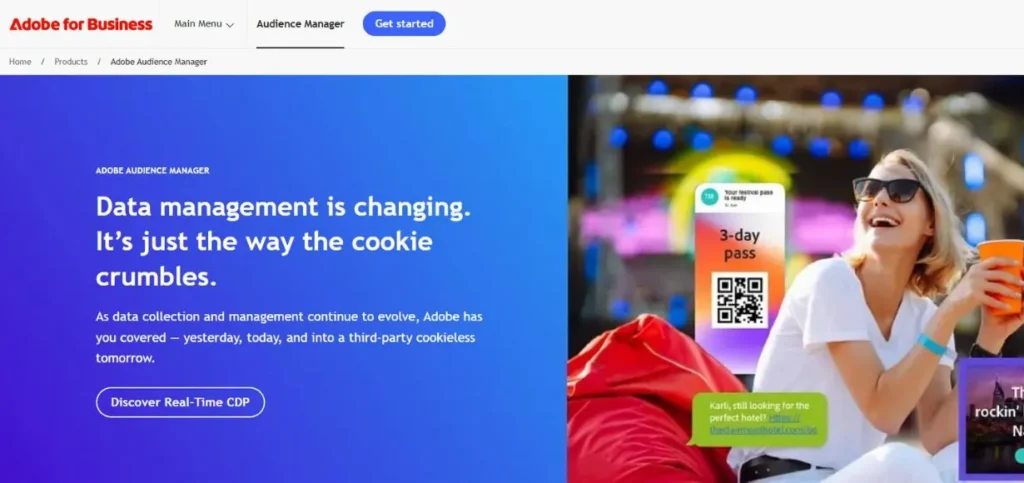
Adobe Audience Manager is one of the most popular Data Management Platforms used by businesses worldwide. It assists businesses in acquiring information across all their online platform and developing rich customer profiles. The platform is included in the experience cloud of Adobe and can be used with other Adobe products. It works with billions of data points per day, which makes it a powerhouse when it comes to large businesses. The platform applies artificial intelligence to figure out customer behavior and anticipate their next move.
Key Features:
- Real-time customer profiles
- State-of-the-art audience segmentation.
- Cross-device identity management.
Pros:
- Compliments Adobe products.
- Powerful AI capabilities
- High-quality processing of data.
Cons:
- Not affordable to small businesses.
- Steep learning curve
- Needs technical knowledge.
Best For: Enterprises
Pricing: Custom pricing (contact sales)
Website: https://business.adobe.com/products/audience-manager/adobe-audience-manager.html
Also Read: Difference Between SIP and Mutual Fund
2. Salesforce DMP (Audience Studio)
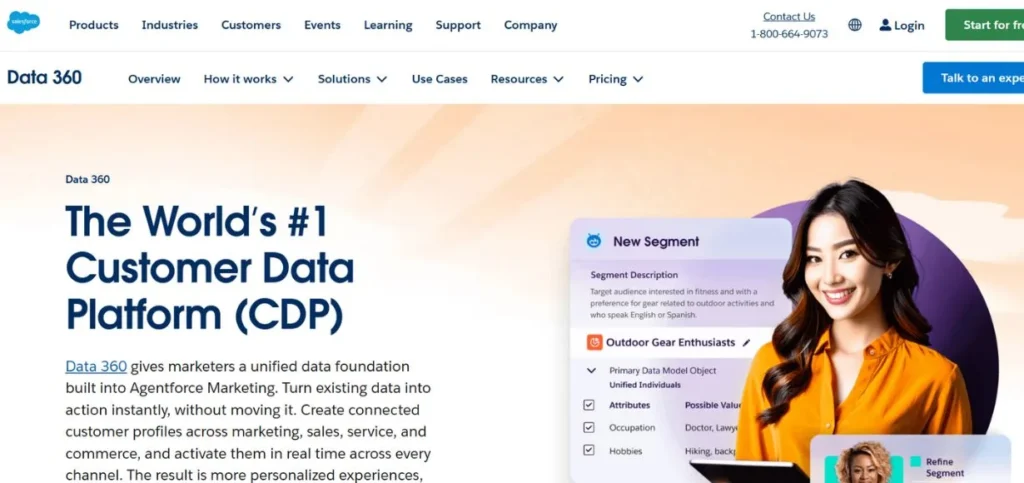
Salesforce DMP or Audience Studio is a multi-faceted Data Management Platform designed with the specific needs of marketers who aspire to know their customers better. It takes data on websites, mobile applications, CRM applications, and offline systems, which builds a comprehensive view of and about individual customers. The platform belongs to the Salesforce Marketing Cloud and is also compatible with other Salesforce products. It assists companies in finding new groups of audience and communicating with them using tailored messages. Salesforce DMP is based on sophisticated algorithms that identify the patterns in customer behavior and forecast future actions.
Key Features:
- Creation of a unified customer view.
- Predictive analytics and intelligence.
- Channel multi-activation of data.
Pros:
- Good Salesforce ecosystem intertwining.
- Easy-to-use dashboard interface.
- Excellent customer support
Cons:
- Complex setup process
- Higher cost structure
- Salesforce without the Salesforce ecosystem.
Best For: Marketers
Pricing: Starting at $12,000/year
Website: https://www.salesforce.com/products/marketing-cloud/data-management/
3. Oracle BlueKai

Oracle BlueKai is one of the strong Data Management Platforms that specializes in handling third-party data with your own customer data. It also operates one of the largest data exchanges in the world, providing companies with access to millions of data points regarding potential customers. The platform assists companies in knowing the nature of their customers and locating other individuals like them. Oracle BlueKai processes data in real-time, and thus it is available right after the process and can be used instantly in marketing campaigns.
Key Features:
- Massive third-party data exchange.
- Live information processing engine.
- High-tech audience discovery systems.
Pros:
- Huge access to a data marketplace.
- Robust integration options
- Good quality data controls.
Cons:
- Complex interface design
- Expensive for small teams
- Stiff conditions of learning.
Best For: Advertisers
Pricing: Custom pricing (contact sales)
Website: https://www.oracle.com/in/
4. Lotame
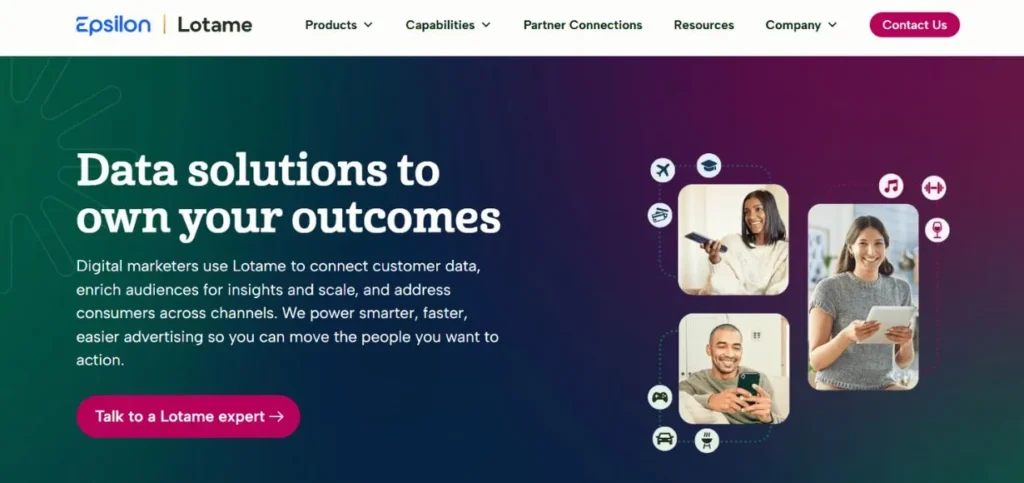
Lotame is an effective Data Management Platform, which is scalable and autonomous, and is suitable for businesses of any magnitude. However, unlike other platforms that require integration with a particular ecosystem, Lotame integrates with literally any marketing or advertisement platform that you utilize. It assists companies in gathering, sorting, and mobilizing their customer information through various channels. Lotame is dedicated to simplifying and making data management easy, even for teams that may not have comprehensive technical expertise. The platform has excellent data enrichment capabilities, which will provide valuable information to your current customer profiles.
Key Features:
- Data connectivity that is platform-neutral.
- User-friendly audience segmentation database.
- Data management that places privacy as the first priority.
Pros:
- Works with any platform
- Fair price system.
- Easy to use
Cons:
- Limited AI features
- Smaller data marketplace
- Simple reporting functionality.
Best For: Mid-size businesses
Pricing: Starting at $3,000/month
Website: https://www.lotame.com/
5. Nielsen Marketing Cloud
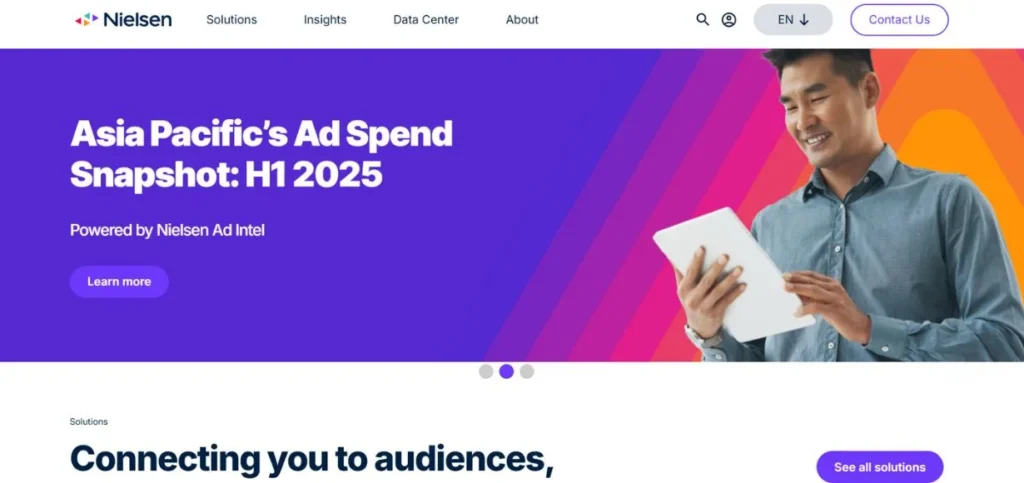
Nielsen Marketing Cloud brings decades of marketing expertise to the world of Data Management Platforms. Nielsen is a company with a reputation for having a strong television rating as well as strong market research that is transferred to digital data management. The platform assists companies in knowing their customers in all media formats, including old TV, digital streaming, and social media. Nielsen Marketing Cloud is a good tool to help understand campaign performance and assign the outcome to particular marketing activities. It has superior modeling to determine the audiences that will react to your marketing messages.
Key Features:
- Taking multimedia measurements.
- High-level attribution modeling.
- Intelligence about competitors.
Pros:
- Trusted brand reputation
- The capability of cross-media measurement.
- Strong benchmarking data
Cons:
- Premium pricing levels
- Complex feature set
- Investment in training is required.
Best For: Media companies
Pricing: Custom pricing (contact sales)
Website: https://www.nielsen.com/
6. Treasure Data
Treasure Data is a customer data platform that functions as comprehensive Data Management Platforms for modern businesses. It concentrates on collecting and aggregating customer data from all possible sources, including websites, mobile applications, IoT, and enterprise systems. The platform is quick and effective in handling massive amounts of data, and therefore it suits big organizations with complex data needs. Treasure Data is a machine learning-based company that enhances its data quality and constructs predictive data-driven customer behavior.
Key Features:
- Extending processing to the enterprise.
- AI implementation.
- Vast data management policies.
Pros:
- Transactions on a large scale.
- Strong security features
- Flexible query options
Cons:
- Needs expertise.
- A higher implementation cost.
- Complex initial setup
Best For: Large enterprises
Pricing: Custom pricing (contact sales)
Website: https://www.treasuredata.com/
7. Segment
Segment has become one of the most popular Data Management Platforms for startups and growing companies. Its data management process is user-friendly to the developer, and websites and mobile apps can easily access data with just a few lines of code. You can code nothing to export data to hundreds of other tools with the touch of a few toggle buttons when you input data in Segment. It is what renders Segment particularly beneficial to the companies that depend on a wide range of marketing and analytics tools. The platform cares about the quality of data, and it is automatically cleaned and standardized on its way through the platform.
Key Features:
- Easy data gathering.
- A wide range of libraries for integration.
- Data is automatically standardized.
Pros:
- Developer-friendly design
- Quick implementation time
- Transparent pricing model
Cons:
- Limited advanced features
- Can get expensive
- Rudimentary analytics.
Best For: Startups
Pricing: Free tier available, paid plans from $120/month
Website: https://segment.com/
8. Tealium AudienceStream
Tealium AudienceStream is a Data Management Platform that is real-time and specializes in producing a unified customer profile based on various data sources. It operates on data in real-time, thus enabling businesses to react to customer behavior in real-time. The platform is a customer data hub, which means that all your marketing technology tools are connected and that data can be accessed anywhere you need it. Tealium focuses on data quality and management, and there are built-in mechanisms for verifying, enriching, and safeguarding the customer data. It has robust audience segmentation features, which enable you to build rich customer groups based on behavior, preference, and characteristics.
Key Features:
- Real-time profile updates
- Industrial universal data hub capability.
- Built-in privacy management
Pros:
- Instant data processing
- Strong governance features
- Superior integration ecology.
Cons:
- Premium pricing tier
- Multifaceted initial set-up.
- Needs continuous repairs.
Best For: Real-time marketing
Pricing: Custom pricing (contact sales)
Website: https://tealium.com/products/audiencestream/
9. Redpoint Global
Redpoint Global offers Data Management Platforms that focus on creating truly unified customer experiences. The platform is a compilation of both data management and powerful orchestration functionality, enabling a business not only to know customers but also to do something with that knowledge in real-time. Redpoint handles both structured and unstructured data (such as database records, social media posts, and emails). It generates what the company labels as a Golden Record of any customer, which is the most precise and comprehensive information that can be known.
Key Features:
- Golden Record creation
- Omnichannel coordination aptitudes.
- Complex information corresponds to algorithms.
Pros:
- Full customer perspective.
- Powerful matching functions.
- Excellent data quality
Cons:
- Enterprise-focused solution
- Long implementation time.
- High total cost
Best For: Omnichannel marketing
Pricing: Custom pricing (contact sales)
Website: https://www.redpointglobal.com/
10. Amobee

Amobee provides Data Management Platforms specifically designed for advertising and media companies. The platform assists companies in planning, executing, and evaluating advertising campaigns in all digital media. The data is gathered by Amobee across connected TV, mobile apps, websites, and social media and provides advertisers with a full picture of their audience. It employs artificial intelligence to optimize the performance of campaigns automatically and redistribute budgets to the most effective channels and audiences.
Key Features:
- Cross-channel campaign management.
- Artificial intelligence optimization engine.
- Brand safety protection
Pros:
- Advertising-focused features
- Powerful optimization programs.
- Full suite of reporting.
Cons:
- Limited beyond advertising
- Complex feature set
- It needs expertise in advertising.
Best For: Digital advertising
Pricing: Custom pricing (contact sales)
Website: https://www.amobee.com/
Common Mistakes to Avoid
- Selecting based on alone: The cheapest Data Management Platforms might lack essential features or become more expensive as you grow, while the most expensive options might offer features you never use.
- Lack of attention to Integration Requirements: The omission of the verification of the ability or inability to connect the platforms with what tools you already have can result in data silos and the emergence of a manual workload that nullifies the goals of automation.
- Overlooking Training Needs: Lack of time and resources to train the team leads to underutilization of platforms and poor adoption, a waste of your investment in the technology.
- Neglecting Data Governance: Failure to adhere to proper data privacy and security assurances can lead to compliance violations, data leakage, and customer trust that will be detrimental to your business.
- The time period of the Implementation is understated: Their slowness in correcting bugs due to hastening the implementation of the platform without proper planning and testing results in inconveniences that can take months to eliminate and frustrate users who rely on the system.
Conclusion
Data Management Platforms have become essential tools for businesses that want to succeed in today’s digital economy. These tools will help you to collect, organize, and use customer data effectively, which will translate into better marketing performance and customer relationships. You need cloud data management platforms to provide you with flexibility, data integration platforms to help you connect systems, and customer data management software to help you understand your audience.
Each of the ten Data Management Platforms discussed in this paper has its own strong points. When it comes to big companies, they might prefer to use Adobe Audience Manager or Oracle BlueKai due to their power or size. Salesforce DMP or Lotame is typically the combination of functionality and cost that middle enterprises would prefer. Segment is a tool that startups tend to use because it is simple and easy to develop with. The trick will be to identify the platform functionality that will match your specific business requirements.
Also Read: Insurance Companies in India
FAQs
Q1: What is the principal aim of Data Management Platforms?
Data Management Platforms help businesses collect, organize, and use customer data from multiple sources to create better marketing campaigns and improve customer experiences. They convert the sporadic data into insights.
Q2: Can Data Management Platforms be used by medium and small companies?
No, Data Management Platforms come in different sizes and price ranges suitable for businesses of all sizes. Affordable solutions, such as Segment, are suitable for startups, and mid-size companies may use solutions like Lotame, or enterprises may use Adobe or Oracle offerings.
Q3: What is the time frame for implementing Data Management Platforms?
Depending on the complexity of the platform in question (e.g., implementing a simple platform such as Segment can take a few weeks), implementation time can take several weeks or even months with more complex enterprise solutions such as Adobe Audience Manager or Oracle BlueKai. The time scale is determined by your requirements for data complexity and integration.
Q4: Do I require any technical knowledge in using Data Management Platforms?
It depends on the platform. Others, such as Salesforce DMP, provide easy-to-use interfaces to marketers, and so, e.g., Segme, they need coding knowledge. The majority of the platforms have training and support to guide users regardless of their level of skills.
Q5: What is the impact that Data Management Platforms have on Data privacy?
Contemporary Data Management Platforms contain capabilities of customer consent management, regulatory compliance, such as GDPR and CCPA, and sensitive information security, such as encryption and access control. They assist companies in utilizing data responsibly and ensuring privacy.